

This week, a friend told me that her daughter was doing a classroom presentation on a weather event. Of course, I have more information on weather events than you can imagine. I asked her what her presentation subject was going to be. She said that they had decided to do it on anything besides Hurricane Katrina, because several people were doing that. The components of the project were to tell about the event, explain why it happened and talk about safety rules. She asked me if I had anything on the tornado that struck the Goshen United Methodist Church on Palm Sunday 1994.
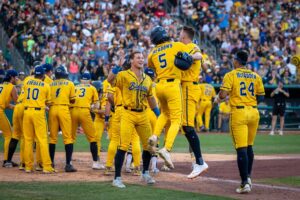
I went back and dug through the files and found all of the original warnings and weather charts from that fateful day. I was working at Channel 42 in those days. The Chief Meteorologist Fred Barnhill had a contract to certify the weather at Rickwood Field, where the movie Cobb was being filmed. He asked me to be the on-camera weatherman for the day. We knew the day before that things were going to be wild. A warm front moved across the state Saturday night, leaving us in the warm sector of a strong low pressure system over the Ohio Valley. Temperatures were in the lower 70s with dewpoints in the upper 60s. The first tornado watch was issued at 9:18 a.m. A Public Severe Weather Outlook was issued at 10:00 a.m., highlighting the threat.
A supercell thunderstorm passed over Birmingham about 10:00 a.m. It was rotating like a top as I watched it visually outside the station. The NWS Birmingham had Doppler radar data from the site at Maxwell AFB. We did not have that data at the television station, as we still utilized the WSR-57 radar at Centreville. Even without Doppler, I knew that storm was going to be a bad one. At 11:27 a.m., the National Weather Service Birmingham issued a tornado warning for southern Cherokee County. Twelve minutes later, the tornado struck the Goshen United Methodist Church, where 20 people perished.
I remember the cold chill that I felt when I heard the first amateur radio report that a church had been struck.. Our worst fears were confirmed at 11:55 when a storm report mentioned that 100 people were trapped in a church. Shortly before 2 p.m., we learned that there were multiple fatalities.
I went back and dug through the files and found all of the original warnings and weather charts from that fateful day. I was working at Channel 42 in those days. The Chief Meteorologist Fred Barnhill had a contract to certify the weather at Rickwood Field, where the movie Cobb was being filmed. He asked me to be the on-camera weatherman for the day. We knew the day before that things were going to be wild. A warm front moved across the state Saturday night, leaving us in the warm sector of a strong low pressure system over the Ohio Valley. Temperatures were in the lower 70s with dewpoints in the upper 60s. The first tornado watch was issued at 9:18 a.m. A Public Severe Weather Outlook was issued at 10:00 a.m., highlighting the threat.
A supercell thunderstorm passed over Birmingham about 10:00 a.m. It was rotating like a top as I watched it visually outside the station. The NWS Birmingham had Doppler radar data from the site at Maxwell AFB. We did not have that data at the television station, as we still utilized the WSR-57 radar at Centreville. Even without Doppler, I knew that storm was going to be a bad one. At 11:27 a.m., the National Weather Service Birmingham issued a tornado warning for southern Cherokee County. Twelve minutes later, the tornado struck the Goshen United Methodist Church, where 20 people perished.
I remember the cold chill that I felt when I heard the first amateur radio report that a church had been struck.. Our worst fears were confirmed at 11:55 when a storm report mentioned that 100 people were trapped in a church. Shortly before 2 p.m., we learned that there were multiple fatalities.
on February 4, 2006, 10:54 pm
Reply to this comment