

Alabama's Greatest Tornado Disaster--March 21, 1932

Today is the 74th anniversary of what I consider Alabama's all-time disaster when it comes to tornadoes. It happened on March 21, 1932 about three weeks before I was born. Yes, even worse than the Super Outbreak of April 3-4, 1974. Here is a story I wrote in 1989 for the statewide Alabama weather wire about three months before I retired from the NWS. It is called Alabama's Worst Tornado Day.

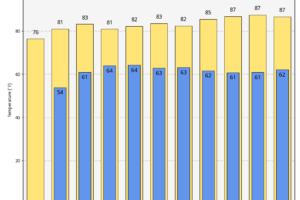
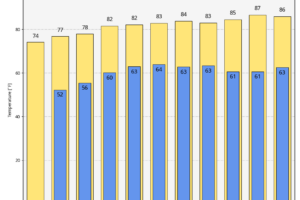
March 20, 1932 dawned warm and springlike across Alabama. By afternoon, temperatures had soared into the 80s over most of the state.

It was a Sunday. The Birmingham News featured a front page story saluting the arrival of spring. Spring was scheduled for 1:54pm that same day.

Said the News, "Spring will bring thoughts of love to the young men and thoughts of new clothes to women. Baseball is in the air, new clothes are on the streets, Easter is only a week away and Spring is on her throne."

But disaster lurked in the wings.

And next day it hit...deadly tornadoes...the greatest catastrophe ever to hit Alabama.

Official U. S. Weather Bureau tabulations said that 268 persons were killed in Alabama with 1,874 injured. However, I spent an entire day at the public library scanning all of the old microfilms of the Birmingham News and Birmingham Age Herald (yes, we once had a great morning paper called the Age Herald). Those seem to indicate that about 300 Alabamians killed and 3,000 were injured.

It was around 3:30 in the afternoon on that fateful Monday, Monday March 21 when the first black funnels came pounding to the ground in the Demopolis, Linden, Faunsdale areas of West-Central Alabama. Death came to 36 people in Marengo County, 136 were injured and 180 homes were destroyed.

Then came the disaster at Tuscaloosa and Northport.

A clock at the demolished Tuscaloosa Country Club stopped at 4:01pm--about 30 minutes after the first strikes near Demopolis.

After striking the western end of Tuscaloosa, the death-dealing tornado plowed across the Warrior River and into Northport. We do not have any witness reports if the tornado had time to look more like a waterspout as it crossed the river. Witnesses did say that it was shaped like an ice cream cone when it moved through the heart of Northport, because it was so filled with debris that it had an eerie white glow resembling a heavy snow shower moving in on the city.

But it was not snow.

Thirty-eight persons died in Northport and 250 were injured. Druid City Hospital in Tuscaloosa was quickly filled to capacity. The Unviersity of Alabama gymnasium was pressed into service as an emergency additional hospital.

Reported the Tuscaloosa News, "It looked as if Northport had been bombed."

Only one hour later...still more disaster. A path of destruction 20 miles long was cut across Cullman County. It left 23 dead and 300 injured with the Fairview Community hardest hit.

The tragic day continued to unfold. Tornadoes struck in Alabama from 3:30 in the afternoon to 7:00 in the evening. A broad area received heavy damage, generally from Demopolis on the SW to Scottsboro, Stevenson and Paint Rock in NE Alabama.

Chilton County in Central Alabama, was hit extremely hard with 58 person killed. The Union Grove community near Jemison was laid to waste. Doctors and nurses from Montgomery and Birmingham worked all night by lantern and flashlight to relieve the widespread suffering.

In Clay County, one of the tornadoes remained on the ground for a distance of 30 miles cutting a path 400 yards wide. A new automobile was carried through the air for a distance of 400 yards. Twelve persons died in Clay County and 200 were injured. After the storm, there were people living in the Clay County Courthouse as a refugee center.

Odd happenings were too numerous to mention, but we did want to mention this one. At Columbiana in Shelby County where 18 persons died, 36 eggs were unbroken on a kitchen table even though the house was totally demolished and the tornado even sucked a drawer out of the table.

Alabama Governor B. M. Miller immediately issued a proclamation calling on all Alabama residents to rise to the occasion and help those in distress. Then he immediately traveled the state for days trying to visit all of the damaged areas and to offer help and encouragement.

No one knows exactly how many tornadoes hit Alabama on that tragic day in 1932. In Perry County, Marion was struck twice in three hours and 23 persons died in the county.

Note: Somewhat like the Super Outbreak in 1974, two separate waves of tornadoes struck Alabama in 1932--the first wave started at midafternoon and the second wave after dark.

Near Faunsdale, in the NE corner of Marengo County between Demopolis and Uniontown, the owner of an 800 acre plantation, found a horse collar, a dead pig and a body of a three-year-old child all jammed together in a hollow tree stump.

PLEASE NOTE: This article is not intended by any means to be an all inclusive story. Much more damage occurred than we mentioned. Our thanks to John Seagale, who last night forwarded us a story from the Talladega Daily Home newspaper giving us some more information. Here are some excerpts:

* According to the March 24, 1932 edition of the Sylacauga Advance (a newspaper), the area experienced the biggest and most disastrous cyclone ever to pass through this section. It carried death and desolation in its wake over a great portion of Alabama and adjoining states.

* Several F4 tornadoes tore through Talladega and nearby counties, leaving close to 70 people dead and many more injured.

* The Sylacauga News, four days after the disaster, said that Talladega County was hit in several places, but Sylacauga seems to have suffered the greatest loss. In fact, according to published reports, the newspaper said the damage was greatest in the devastating track in deaths, injuries and destruction of property.

* Jimmy Hare of Quarry Road, was only six when one of the F4 tornadoes came through Sylacauga after 7:00pm. "I went with my dad to milk a cow in the backyard before dark," he said. "My dad was talking about bad weather coming, but he was not thinking about any of that." He and his father returned to the house where they rode out the storm with Hare's mother, sister and uncle. "We heard something coming and it sounded just like a train coming down the road," he said. He and his family survived, but their home was destroyed. It did not leave them with anything except the floor.

* According to statistics obtained by the Talladega County EMA, through the National Weather Service, 29 people were killed within the city limits of Sylacauga with 11 dead in rural areas around the city.

* According to the March 24, 1932 Sylacauga Advance, "The whole of upper Broadway and Main streets suffered greatly. The grammar school building was unroofed and almost totally destroyed, while the junior high was unroofed and otherwise damaged.

The above excerpts from a very interesting article by Gabe Carpenter in yesterday's Daily Home.

FINAL NOTES
...One of these days, I wish I could write a book about that event, but I haven't even started on my book about my 32 years in the National Weather Service, which will be titled "Scatter Brains and Scattered Showers"

...I often wonder if they had communications in 1932 like we have today, including wall-to-wall TV coverage and wall-to-wall radio warnings, could the death and injury toll been greatly reduced. I am positive it could.

...It would be years before people like James Spann, Jerry Tracey, David Neal and David Sawyer would show up on this old earth.

...Back in 1932, there were very few telephones, no television, radio stations were few in number and most people traveled probably in a Ford Model T.

Posted by weathernut  
on March 21, 2006, 1:06 pm
I firmly believe the death toll would be lower today. Not just from wall to wall communication, but also advances in trauma treatment. Paramedics and trauma centers would play a huge role in reducing loss of life. Hope we don't have another outbreak like that anytime soon!

Reply to this comment
Posted by  
on March 21, 2006, 1:07 pm
Thank you J.B. for sharing that information and those stories with us. I do wish that you could write an entire book about both outbreaks - 1932 and 1974!

Reply to this comment
Posted by Craig  
on March 21, 2006, 3:00 pm
Mr. Elliott,

My grandfather survived the tornados of 1932. He was born on a farm in the Macedonia cummunity in Chilton county and was 7 at the time the storms hit. The storm wiped out several families they knew, but no one in our own family. I love hearing him tell stories about life growing up... I wish he told more. He doesn;t remember a lot about the tornado itself but remembers a lot about the days following. Then in 1998, I had a very similar experience with the Oak Grove/Concord F5. I was about a half a mile from its path and heard the thing loud and clear. Monster tornados 2 generations apart in two different communities. As you say... "Life goes on"

Reply to this comment
Posted by   www
on March 21, 2006, 11:15 pm
Craig,
My mother-in-law and her family were also survivors of the storms in Chilton County. Their home in the Lomax community was destroyed.

Reply to this comment
Posted by   www
on March 22, 2006, 1:36 am
Another strange but apparently true story which arose after the March 1932 tornado disaster (which I read about many years ago in a weather book at the local library):

A man near Sylacauga named Luther Kelly lost his second wife, who was killed during the March 21, 1932 tornado outbreak. Reportedly, this was the second wife Mr Kelly lost due to a tornado; the book stated Luther Kelly's first wife was killed by a tornado in May 1917 (and sure enough, there was a killer tornado in Talladega county on May 26, 1917 which took over two dozen lives; presumably one of them Luther Kelly's first wife).

Wonder what the odds are of having two spouses die in tornadoes in the same county......but occurring 15 years apart?

Perry

Reply to this comment
Posted by  
on March 22, 2006, 8:56 am
Perry...
Thanks for a very interesting account...and most unusual for sure.

I had not heard that story before.

Hang in there over in West Georgia! Hope your grandmother is OK.

Reply to this comment
Posted by   www
on March 22, 2006, 5:32 pm
Thanks J.B.! My grandmother is fortunately doing much better (no hospital visits since December).

Have a wonderful evening,
Perry

Reply to this comment
Posted by Chris M.  
on March 22, 2006, 7:55 am
Wow! (What else to say?)

Reply to this comment
Posted by   www
on March 22, 2006, 10:56 am
JB, That was very interesting...I read it yesterday but didn't have time to comment. I really would like to see those books! I did all kinds of research in college looking back over old newspapers on microfilm. I still have stacks of those copies I made. One of my life's goals is to write a book about Alabama's history with tornadoes. http://mikewx.blogspot.com/


Reply to this comment
Posted by  
on March 22, 2006, 12:12 pm
Great information JB. Like the others, I do wish you could write that book.
I do have a question - I live in Helena and I know it was badly hit by a tornado at about that time. But I have always heard the year was 1933. Could it have just been a different time or do you have any information pointing to the 1932 outbreak as part of what literally destroyed most of the town?

Reply to this comment